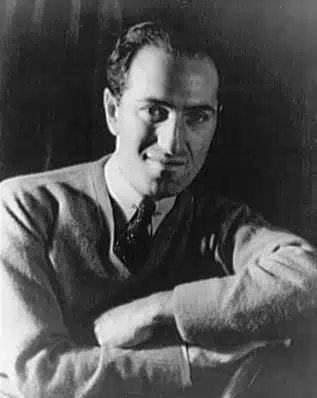
George Gershwin - Rhapsody In Blue 12
- Classical music composed by George Gershwin a film by Adrian Marthaler (1981)
Related Videos
Clair de Lune - Randy George - Theremin
Clair de Lune by Claude Debussy.
Randy George, theremin
http://randygeorgemusic.com
Beautiful piece of music. Please enjoy. Higher quality video download at: http://bit.ly/cdlRGM
If you are new to the theremin, please discover it in more depth. It is the most fascinating musical instrument in the world (when played as it was originally intended).
The theremin entered my life four years ago. It has been a tremendously challenging journey, but it is immensely rewarding. The theremin is absolutely deceptively difficult to play with musical precision and finesse.
Clara Rockmore, the foremost virtuoso of the theremin introduced it to the world as a serious musical instrument. Over the course of recent music history, this expressive voice was forgotten. Watch/listen to electronic music pioneer Robert Moog discuss the theremin in a video entitled "bob moog cnn" in my video favorites section.
I feel it's definitely time to reconnect with the roots of the instrument. With these classical theremin videos, I hope to light the way back home.
I would like to send a huge personal thanks to mathematician/thereminist, Thierry Frenkel. The volume expression circuit of my Moog Etherwave Pro theremin has been modified with a very important enhancement that he designed. visit his website for more info at: http://theremin.tfrenkel.com
Clair de Lune by Claude Debussy.Randy George, theremin
http://randygeorgemusic.com
Beautiful piece of music. Please enjoy. Higher quality video download at: http://bit.ly/cdlRGM
If you are new to the theremin, please discover it in more depth. It is the most fascinating musical instrument in the world (when played as it was originally intended).
The theremin entered my life four years ago. It has been a tremendously challenging journey, but it is immensely rewarding. The theremin is absolutely deceptively difficult to play with musical precision and finesse.
Clara Rockmore, the foremost virtuoso of the theremin introduced it to the world as a serious musical instrument. Over the course of recent music history, this expressive voice was forgotten. Watch/listen to electronic music pioneer Robert Moog discuss the theremin in a video entitled "bob moog cnn" in my video favorites section.
I feel it's definitely time to reconnect with the roots of the instrument. With these classical theremin videos, I hope to light the way back home.
I would like to send a huge personal thanks to mathematician/thereminist, Thierry Frenkel. The volume expression circuit of my Moog Etherwave Pro theremin has been modified with a very important enhancement that he designed. visit his website for more info at: http://theremin.tfrenkel.com
Vocalise - Randy George Theremin
Here's my rendition of this famous piece by Rachmaninov. Enjoy.
If you don't know what a theremin is, please look it up on Wikipedia. It is fascinating to say the least.
I'll be here, cooking up some more music soon:
www.myspace.com/etherandaether
In this video :
Randy George - Moog Etherwave Pro Theremin
Please visit me on the web at: http://randygeorgemusic.com
Here's my rendition of this famous piece by Rachmaninov. Enjoy.If you don't know what a theremin is, please look it up on Wikipedia. It is fascinating to say the least.
I'll be here, cooking up some more music soon:
www.myspace.com/etherandaether
In this video :
Randy George - Moog Etherwave Pro Theremin
Please visit me on the web at: http://randygeorgemusic.com
Clair de Lune - Randy George, theremin
Clair de Lune by Claude Debussy . Randy George, theremin randygeorgemusic.com Beautiful piece of music. Please enjoy. Higher quality video download at bit.ly If you are new to the theremin, please discover it in more depth. It is the most fascinating musical instrument in the world (when played as it was originally intended). The theremin entered my life four years ago. It has been a tremendously challenging journey, but it is immensely rewarding. The theremin is absolutely deceptively difficult to play with musical precision and finesse. Clara Rockmore, the foremost virtuoso of the theremin introduced it to the world as a serious musical instrument. Over the course of recent music history, this expressive voice was forgotten. Watch/listen to electronic music pioneer Robert Moog discuss the theremin in a video entitled "bob moog cnn" in my video favorites section. I feel it's definitely time to reconnect with the roots of the instrument. With these classical theremin videos, I hope to light the way back home. I would like to send a huge personal thanks to mathematician/thereminist, Thierry Frenkel. The volume expression circuit of my Moog Etherwave Pro theremin has been modified with a very important enhancement that he designed. visit his website for more info at: theremin.tfrenkel.com
Meditation from "Thaïs" - Randy George, theremin
For more video of this concert please visit: randygeorgemusic.com Live performance of Meditation from "Thaïs" by Jules Massenet. This was part of a concert at the Casino De Salamanca in Salamanca, Spain on December 8, 2008. Randy George, theremin Jose Enrique Serrano Comes, piano A very special thanks goes to Carmen Bachiller Martin and Jorge Sastre Martínez from Universidad Politécnica de Valencia AND Alejandro Martinez Estrada from Conservatorio Superior de Música de Salamanca for making this performance possible. Classical Theremin. Two words that should have always gone together. This is truly how the instrument was originally intended to be played. This kind of performance was made possible because of a fire that burned in a young woman named Clara Rockmore. She was the first person to prove that beautiful melodies could be extracted directly from the air. She continues to be a tremendous inspiration. By posting these videos, it is my wish to inspire others also, to open people's minds to possibilities that are completely out of sight, and to the help the theremin to a place where it can be truly respected again as it had been during the time of Ms. Rockmore. If this is your first time seeing and hearing a theremin, I congratulate you. You have just discovered the most fascinating musical instrument in the world. I've compiled some useful resources for learning more about it. Please visit the links section of my website. Please visit my home on the web <b>...</b>
Jack Gibbons plays Authentic Gershwin
Jack Gibbons plays Gershwin's Rhapsody in Blue, I Got Rhythm, etc and talks about his authentic Gershwin recreations, with Gershwin biographer Edward Jablonski and broadcaster Selina Scott, plus rare archive films of Gershwin himself. <br /><br />For more information on Jack Gibbons visit his official website at http://www.jackgibbons.com
Summertime by George Gershwin
"Summertime" from "Porgy and Bess" by George Gershwin Performed live by Cecily Nall, soprano & The Point Chamber Orchestra www.thepointchamberorchestra.org conducted by Efraín Amaya www.efrainamaya.com July 16, 2006 La Fenice Theater Venice, Italy
Gershwin in Focus 2/3 (Jack Gibbons & Sir Ben Kingsley)
Part 2 of a one hour illustrated talk on the life and work of George Gershwin, written and presented by the award-winning Gershwin specialist Jack Gibbons with Sir Ben Kingsley as the voice of George Gershwin. For more information on Jack Gibbons visit www.jackgibbons.com You can also follow Jack Gibbons on Facebook at www.facebook.com
Sumi Jo - Verdi - La Traviata - Violetta - Sempre Libera
"Ah! Fors'e lui"
"Sempre Libera"
Sokcho Summer Festival,
Sokcho, South Korea, 2005.
"Ah! Fors'e lui""Sempre Libera"
Sokcho Summer Festival,
Sokcho, South Korea, 2005.
Maria Callas - La Traviata
Maria Callas (1923-1977)
Giuseppe Verdi (1813-1901)
La traviata
E strano! E strano!...Ah, fors'è lui che l'anima...Follie! Follie!...Sempre libera
Orchestra sinfonica di Torino della RAI
Conducted by Gabriele Santini
1953
VIOLETTA (sola)
È strano! È strano! In core
scolpiti ho quegli accenti!
Saria per me sventura un serio amore?
Che risolvi, o turbata anima mia?
Null'uomo ancora t'accendeva -- O gioia
ch'io non conobbi, esser amata amando!
E sdegnarla poss'io
per l'aride follie del viver mio?
Ah, fors'è lui che l'anima
solinga ne' tumulti
godea sovente pingere
de' suoi colori occulti!
Lui che modesto e vigile
all'egre soglie ascese,
e nuova febbre accese,
destandomi all'amor.
A quell'amor ch'è palpito
dell'universo intero,
misterioso, altero,
croce e delizia al cor!
Follie! follie! Delirio vano è questo!
Povera donna, sola,
abbandonata in questo
popoloso deserto
che appellano Parigi.
Che spero or più?
Che far degg'io? Gioire,
di voluttà ne' vortici perir.
Gioir, gioir!
Sempre libera degg'io
folleggiare di gioia in gioia,
vo' che scorra il viver mio
pei sentieri del piacer.
Nasca il giorno, o il giorno muoia,
sempre lieta ne' ritrovi,
a diletti sempre nuovi
dee volare il mio pensier.
ALFREDO (sotto al balcone)
Amore, amor è palpito...
VIOLETTA
Oh!
ALFREDO
...dell'universo intero --
VIOLETTA
Oh amore.
ALFREDO
Misterioso, misterioso, altero,
croce, croce e delizia,
croce e delizia, delizia al cor.
VIOLETTA
Follie! follie! Ah sì! Gioir, gioir!
Sempre libera degg'io
folleggiare di gioia in gioia,
vo' che scorra il viver mio
pei sentieri del piacer.
Nasca il giorno, o il giorno muoia,
sempre lieta ne' ritrovi,
a diletti sempre nuovi,
dee volare il mio pensier.
ALFREDO
Amor è palpito
dell'universo --
VIOLETTA
Ah! Dee volar il mio pensier.
Ah! il mio pensier. Il mio pensier.
Maria Callas (1923-1977)Giuseppe Verdi (1813-1901)
La traviata
E strano! E strano!...Ah, fors'è lui che l'anima...Follie! Follie!...Sempre libera
Orchestra sinfonica di Torino della RAI
Conducted by Gabriele Santini
1953
VIOLETTA (sola)
È strano! È strano! In core
scolpiti ho quegli accenti!
Saria per me sventura un serio amore?
Che risolvi, o turbata anima mia?
Null'uomo ancora t'accendeva -- O gioia
ch'io non conobbi, esser amata amando!
E sdegnarla poss'io
per l'aride follie del viver mio?
Ah, fors'è lui che l'anima
solinga ne' tumulti
godea sovente pingere
de' suoi colori occulti!
Lui che modesto e vigile
all'egre soglie ascese,
e nuova febbre accese,
destandomi all'amor.
A quell'amor ch'è palpito
dell'universo intero,
misterioso, altero,
croce e delizia al cor!
Follie! follie! Delirio vano è questo!
Povera donna, sola,
abbandonata in questo
popoloso deserto
che appellano Parigi.
Che spero or più?
Che far degg'io? Gioire,
di voluttà ne' vortici perir.
Gioir, gioir!
Sempre libera degg'io
folleggiare di gioia in gioia,
vo' che scorra il viver mio
pei sentieri del piacer.
Nasca il giorno, o il giorno muoia,
sempre lieta ne' ritrovi,
a diletti sempre nuovi
dee volare il mio pensier.
ALFREDO (sotto al balcone)
Amore, amor è palpito...
VIOLETTA
Oh!
ALFREDO
...dell'universo intero --
VIOLETTA
Oh amore.
ALFREDO
Misterioso, misterioso, altero,
croce, croce e delizia,
croce e delizia, delizia al cor.
VIOLETTA
Follie! follie! Ah sì! Gioir, gioir!
Sempre libera degg'io
folleggiare di gioia in gioia,
vo' che scorra il viver mio
pei sentieri del piacer.
Nasca il giorno, o il giorno muoia,
sempre lieta ne' ritrovi,
a diletti sempre nuovi,
dee volare il mio pensier.
ALFREDO
Amor è palpito
dell'universo --
VIOLETTA
Ah! Dee volar il mio pensier.
Ah! il mio pensier. Il mio pensier.
Luciano Pavarotti - La Donna è Mobile Rigoletto
The "king" Luciano Pavarotti as Il Duca di Mantova in the screen movie "Rigoletto" (1983) based on Giuseppe Verdi's opera with the same name (1851).
La Donna è Mobile - Giuseppe Verdi
La donna è mobile
Qual piuma al vento
Muta d'accento
E di pensiero
Sempre un'amabile
Leggiadro viso
In pianto o in riso
È menzognero
La donna è mobil
Qual piuma al vento
Muta d'accento
E di pensier
E di pensier
E di pensier
è sempre misero
Chi a lei s'affida
Chi le confida
Mal cauto il core
Pur mai non sentesi
Felice appieno
Chi su quel seno
Non liba amore
La donna è mobil
Qual piuma al vento
Muta d'accento
E di pensier
E di pensier
E di pensier...
The "king" Luciano Pavarotti as Il Duca di Mantova in the screen movie "Rigoletto" (1983) based on Giuseppe Verdi's opera with the same name (1851).La Donna è Mobile - Giuseppe Verdi
La donna è mobile
Qual piuma al vento
Muta d'accento
E di pensiero
Sempre un'amabile
Leggiadro viso
In pianto o in riso
È menzognero
La donna è mobil
Qual piuma al vento
Muta d'accento
E di pensier
E di pensier
E di pensier
è sempre misero
Chi a lei s'affida
Chi le confida
Mal cauto il core
Pur mai non sentesi
Felice appieno
Chi su quel seno
Non liba amore
La donna è mobil
Qual piuma al vento
Muta d'accento
E di pensier
E di pensier
E di pensier...
Gracia - William Tell Overture
Rossini's classical piece performed by three talented violin player ladies from Hungary
Jung Lin Performing Liszts Hungarian Rhapsody no 2
Complete video at: http://fora.tv/2007/07/08/Piano_in_World_Civilization
Concert piano virtuoso Jung Lin performs Franz Liszt's "Hungarian Rhapsody no. 2." This excerpt is taken from a program entitled "The Piano in World Civilization," featuring commentary by piano expert David Dubal.
-----
"The Piano in World Civilization" with David Dubal and Jung Lin in discussion and performance at the 2007 Aspen Ideas Festival.
In this, its third year, Aspen Ideas Festival once again gathers scientists, artists, politicians, historians, educators, activists, and other great thinkers around some of the most important and fascinating ideas of our time. As these thinkers present their provocative ideas, they engage a sophisticated and highly motivated audience.
Jung Lin is a classical pianist who has been acclaimed for her poetic and virtuosic performances. A native of Taiwan, she conducted her own orchestral works at age 12 and has won numerous competitions. At 16, her symphonic poem, The Black Wedding, was given its premiere by the Juilliard Symphony under Miguel Harth-Bedoya. Lin graduated with honors from the Juilliard School, and she has performed at such prestigious venues as the International Keyboard Institute and Festival, the Summit Festival in China, and at Alice Tully Hall at the Lincoln Center for Performing Arts. Late this year, Naxos will release Jung Lin's two all-Medtner CDs, including the first complete recording of the Russian composer's 38 Fairy Tales.
Complete video at: http://fora.tv/2007/07/08/Piano_in_World_CivilizationConcert piano virtuoso Jung Lin performs Franz Liszt's "Hungarian Rhapsody no. 2." This excerpt is taken from a program entitled "The Piano in World Civilization," featuring commentary by piano expert David Dubal.
-----
"The Piano in World Civilization" with David Dubal and Jung Lin in discussion and performance at the 2007 Aspen Ideas Festival.
In this, its third year, Aspen Ideas Festival once again gathers scientists, artists, politicians, historians, educators, activists, and other great thinkers around some of the most important and fascinating ideas of our time. As these thinkers present their provocative ideas, they engage a sophisticated and highly motivated audience.
Jung Lin is a classical pianist who has been acclaimed for her poetic and virtuosic performances. A native of Taiwan, she conducted her own orchestral works at age 12 and has won numerous competitions. At 16, her symphonic poem, The Black Wedding, was given its premiere by the Juilliard Symphony under Miguel Harth-Bedoya. Lin graduated with honors from the Juilliard School, and she has performed at such prestigious venues as the International Keyboard Institute and Festival, the Summit Festival in China, and at Alice Tully Hall at the Lincoln Center for Performing Arts. Late this year, Naxos will release Jung Lin's two all-Medtner CDs, including the first complete recording of the Russian composer's 38 Fairy Tales.
Edgar Cruz - Bohemian Rhapsody classical guitar
http://videoprogressions.tv/downloads/product_info.php?products_id=35
"Bohemian Rhapsody" arranged for solo guitar by Edgar Cruz. Performance and Teaching excerpts.
http://videoprogressions.tv/downloads/product_info.php?products_id=35"Bohemian Rhapsody" arranged for solo guitar by Edgar Cruz. Performance and Teaching excerpts.
Victor Borge - Hungarian Rhapsody No. 2
Victor Borge was classical piano's class clown :) the man was a genius.
In this skit, he .. well.. just watch :)
Victor Borge was classical piano's class clown :) the man was a genius.In this skit, he .. well.. just watch :)
Jascha Heifetz plays Tchaikovsky Violin Concerto 1st mov
Jascha Heifetz plays Tchaikovsky Violin Concerto in D Major, Op. 35: I. Allegro moderato
Rachmaninoff - Vocalise For Violin
Title : Sergei Rachmaninov, Vocalise (Songs (14), Op. 34: no 14)
From Wikipedia,Vocalise, Op. 34 No. 14 is a song by Sergei Rachmaninoff, published in 1912 as the last of his Fourteen Songs, Opus 34. Written for voice (soprano or tenor) with piano accompaniment, it contains no words, but is sung using any one vowel (of the singer's choosing). It was dedicated to soprano Antonina Nezhdanova.
Although the original publication stipulates that the song may be sung by either soprano or tenor voice, it is usually chosen to be performed by a soprano. As with many classical vocal pieces, it is transcribed in a variety of keys, allowing the performer to choose a vocal range more suitable to their natural voice, so that artists who may not have the higher range of a soprano can nevertheless perform the song. When sung by a tenor, it is sung an octave lower than the same key when sung by a soprano.
Title : Sergei Rachmaninov, Vocalise (Songs (14), Op. 34: no 14)From Wikipedia,Vocalise, Op. 34 No. 14 is a song by Sergei Rachmaninoff, published in 1912 as the last of his Fourteen Songs, Opus 34. Written for voice (soprano or tenor) with piano accompaniment, it contains no words, but is sung using any one vowel (of the singer's choosing). It was dedicated to soprano Antonina Nezhdanova.
Although the original publication stipulates that the song may be sung by either soprano or tenor voice, it is usually chosen to be performed by a soprano. As with many classical vocal pieces, it is transcribed in a variety of keys, allowing the performer to choose a vocal range more suitable to their natural voice, so that artists who may not have the higher range of a soprano can nevertheless perform the song. When sung by a tenor, it is sung an octave lower than the same key when sung by a soprano.
Americas Got Talent - Jackie Evancho 10 Opera Singer
The YouTube.com community picked their favorite Jackie Evancho. She is a young opera singer from Pittsburgh, Pennsylvania and can be compared to Susan Boyle. Now she may look like an average kid, but this child has a set of pipes. The video entry gave an amazing performance that one person commented sounded like an Angel. Looking to be a very young contestant, there is no doubt she might steal the show.
Bio
Jackie Evancho - 10yrs old - Singer
Jackie has a style that is all her own. At ten years old, she possesses an ability that many older artists lack. Her talent and presence captivate all that hear her. Jackie performs with such style and grace that we forget that we are watching/listening to a child. She has been called by a many, a singing prodigy!
By Jerry Shriver, USA TODAY
When a 10-year-old singer belted out a Puccini aria with the polished voice of someone thrice her age on Tuesday night's episode of America's Got Talent, the "next Susan Boyle!" superlatives flowed across the mediascape. But so did the question: Is Jackie Evancho for real?
The precocious soprano, a Pittsburgh-area fourth-grader who auditioned for the NBC show with a YouTube video, wowed the panel with a live performance of O Mio Babbino Caro. But a video clip appears to show that her lips are ever-so-slightly out of sync with the audio.
Fremantle, the company that produces AGT and Fox's American Idol, makes contestants available only to local media. But "there was no lip-syncing," says producer Jason Raff.
LIFELINE LIVE:More on Jackie, plus see video
During rehearsals, "the whole crew was saying it looked like she's lip-syncing," he says. "And on the close-ups, her mouth is moving a different way than the sound coming out. It is weird, but it's just how she sings."
The voters embraced her happily: On Wednesday's results show, Evancho advanced to the semifinals.
Further testimony to her true talent comes from her track record: Her self-released EP, Prelude to a Dream, has sold around the world, and she has performed with David Foster, sung the national anthem at the Pittsburgh Pirates home opener and appeared on PBS.
"She is just truly blessed with a voice that's phenomenal," says classical-crossover composer/conductor Tim Janis, who is including Evancho in his American Christmas Carol show (Dec. 2) at Carnegie Hall.
A film producer had alerted Janis to Evancho two years ago, and he put her in one of his Celebrate America specials for the Pittsburgh public television station WQED. "Jackie just stood out and shined," he says. Her voice "totally captivated me and sent me to a place that was uplifting and inspiring."
Even if listeners don't know that it's a child singing, "the voice stands on its own. It's a big sound that fills the room."
The reaction recalls the Cinderella story of Boyle, who became an Internet sensation after her Britain's Got Talent appearance and went on to record an album that has sold 9 million copies worldwide.
Evancho trains with at least two vocal coaches, which is essential at her age "to make sure you don't abuse the gift," Janis says. "A young vocalist is in the process of developing those muscles, and you don't overdo it."
He won't speculate whether Evancho, who sings both pop and classical, will choose one specialty. "She has a rare gift to speak to many hearts. In my mind, the classical setting is a really nice match for her voice. But someone who doesn't follow that genre can still appreciate the beauty.
"Whatever she picks, she will do well."
http://www.JackieEvancho.co
http://www.JacquelineEvancho.co
http://www.JacquelineMarieEvancho.com
The YouTube.com community picked their favorite Jackie Evancho. She is a young opera singer from Pittsburgh, Pennsylvania and can be compared to Susan Boyle. Now she may look like an average kid, but this child has a set of pipes. The video entry gave an amazing performance that one person commented sounded like an Angel. Looking to be a very young contestant, there is no doubt she might steal the show.Bio
Jackie Evancho - 10yrs old - Singer
Jackie has a style that is all her own. At ten years old, she possesses an ability that many older artists lack. Her talent and presence captivate all that hear her. Jackie performs with such style and grace that we forget that we are watching/listening to a child. She has been called by a many, a singing prodigy!
By Jerry Shriver, USA TODAY
When a 10-year-old singer belted out a Puccini aria with the polished voice of someone thrice her age on Tuesday night's episode of America's Got Talent, the "next Susan Boyle!" superlatives flowed across the mediascape. But so did the question: Is Jackie Evancho for real?
The precocious soprano, a Pittsburgh-area fourth-grader who auditioned for the NBC show with a YouTube video, wowed the panel with a live performance of O Mio Babbino Caro. But a video clip appears to show that her lips are ever-so-slightly out of sync with the audio.
Fremantle, the company that produces AGT and Fox's American Idol, makes contestants available only to local media. But "there was no lip-syncing," says producer Jason Raff.
LIFELINE LIVE:More on Jackie, plus see video
During rehearsals, "the whole crew was saying it looked like she's lip-syncing," he says. "And on the close-ups, her mouth is moving a different way than the sound coming out. It is weird, but it's just how she sings."
The voters embraced her happily: On Wednesday's results show, Evancho advanced to the semifinals.
Further testimony to her true talent comes from her track record: Her self-released EP, Prelude to a Dream, has sold around the world, and she has performed with David Foster, sung the national anthem at the Pittsburgh Pirates home opener and appeared on PBS.
"She is just truly blessed with a voice that's phenomenal," says classical-crossover composer/conductor Tim Janis, who is including Evancho in his American Christmas Carol show (Dec. 2) at Carnegie Hall.
A film producer had alerted Janis to Evancho two years ago, and he put her in one of his Celebrate America specials for the Pittsburgh public television station WQED. "Jackie just stood out and shined," he says. Her voice "totally captivated me and sent me to a place that was uplifting and inspiring."
Even if listeners don't know that it's a child singing, "the voice stands on its own. It's a big sound that fills the room."
The reaction recalls the Cinderella story of Boyle, who became an Internet sensation after her Britain's Got Talent appearance and went on to record an album that has sold 9 million copies worldwide.
Evancho trains with at least two vocal coaches, which is essential at her age "to make sure you don't abuse the gift," Janis says. "A young vocalist is in the process of developing those muscles, and you don't overdo it."
He won't speculate whether Evancho, who sings both pop and classical, will choose one specialty. "She has a rare gift to speak to many hearts. In my mind, the classical setting is a really nice match for her voice. But someone who doesn't follow that genre can still appreciate the beauty.
"Whatever she picks, she will do well."
http://www.JackieEvancho.co
http://www.JacquelineEvancho.co
http://www.JacquelineMarieEvancho.com
Johann Strauss II - The Blue Danube Waltz
Title : Johann Strauss II , The Blue Danube Waltz
Date : 1867
From Wikipedia,The Blue Danube is the common English title of An der schönen blauen Donau op. 314 (On the Beautiful Blue Danube), a waltz by Johann Strauss II, composed in 1867. Originally performed 9 February 1867 at a concert of the Wiener Männergesangsverein (Vienna Men's Choral Association), it has been one of the most consistently popular pieces of music in the classical repertoire. Its initial performance was only a mild success, however, and Strauss is reputed to have said "The devil take the waltz, my only regret is for the coda -- I wish that had been a success!"
The waltz originally had an accompanying song text written by Josef Weyl. Strauss adapted it into a purely orchestral version for the World's Fair in Paris that same year, and it became a great success in this form. The instrumental version is by far the most commonly performed today. An alternate text by Franz von Gernerth, Donau so blau (Danube so blue), is also used on occasion.
The sentimental Viennese connotations of the piece have made it into a sort of unofficial Austrian national anthem. It is a traditional encore piece at the annual Vienna New Year's Concert. The first few bars are also the interval signal of Osterreich Rundfunk's overseas programs.
It is reported by composer Norman Lloyd in his "Golden Encyclopedia of Music" that when asked by Frau Strauss for an autograph, the composer Johannes Brahms autographed Mrs. Strauss's fan by writing on it the first few bars of the Blue Danube. Under it he wrote "Unfortunately not by Johannes Brahms".The work commences with an extended introduction in the key of A major with shimmering (tremolo) violins and a French horn spelling out the familiar waltz theme, answered by staccato wind chords, in a subdued mood. It rises briefly into a loud passage but quickly dies down into the same restful nature of the opening bars. A contrasting and quick phrase in D major anticipates the waltz before 3 quiet downward-moving bass notes "usher in" the first principal waltz melody.
The first waltz theme is familiar gently rising triad motif in cellos and horns in the tonic D major, accompanied by harps; the Viennese waltz beat is accentuated at the end of each 3-note phrase. The Waltz 1A triumphantly ends its rounds of the motif, and waltz 1B follows in the same key; the genial mood is still apparent.
Waltz 2A glides in quietly (still in D major) before a short contrasting middle section in B flat major. The entire section is repeated.
A more dour waltz 3A is introduced in G major before a fleeting eighth-note melodic phrase (waltz 3B). An loud Intrada (introduction) is then played. Waltz 4A starts off in a romantic mood (F major) before a more joyous waltz 4B in the same key.
After another short Intrada in A, cadencing in F-sharp minor, sonorous clarinets spell out the poignant melody of waltz 5A in A. Waltz 5B is the climax, punctuated by cymbal crashes. Each of these may be repeated at the discretion of the performer.
The coda recalls earlier sections (3A and 2A) before furious chords usher in a recap of the romantic Waltz 4A. The idyll is cut short as the waltz hurries back to the famous waltz theme 1A again. This statement is cut short, however, by the final codetta: a variation of 1A is presented, connecting to a rushing eighth-note passage in the final few bars: repeated tonic chords underlined by a snare drumroll and a bright-sounding flourish.
Title : Johann Strauss II , The Blue Danube WaltzDate : 1867
From Wikipedia,The Blue Danube is the common English title of An der schönen blauen Donau op. 314 (On the Beautiful Blue Danube), a waltz by Johann Strauss II, composed in 1867. Originally performed 9 February 1867 at a concert of the Wiener Männergesangsverein (Vienna Men's Choral Association), it has been one of the most consistently popular pieces of music in the classical repertoire. Its initial performance was only a mild success, however, and Strauss is reputed to have said "The devil take the waltz, my only regret is for the coda -- I wish that had been a success!"
The waltz originally had an accompanying song text written by Josef Weyl. Strauss adapted it into a purely orchestral version for the World's Fair in Paris that same year, and it became a great success in this form. The instrumental version is by far the most commonly performed today. An alternate text by Franz von Gernerth, Donau so blau (Danube so blue), is also used on occasion.
The sentimental Viennese connotations of the piece have made it into a sort of unofficial Austrian national anthem. It is a traditional encore piece at the annual Vienna New Year's Concert. The first few bars are also the interval signal of Osterreich Rundfunk's overseas programs.
It is reported by composer Norman Lloyd in his "Golden Encyclopedia of Music" that when asked by Frau Strauss for an autograph, the composer Johannes Brahms autographed Mrs. Strauss's fan by writing on it the first few bars of the Blue Danube. Under it he wrote "Unfortunately not by Johannes Brahms".The work commences with an extended introduction in the key of A major with shimmering (tremolo) violins and a French horn spelling out the familiar waltz theme, answered by staccato wind chords, in a subdued mood. It rises briefly into a loud passage but quickly dies down into the same restful nature of the opening bars. A contrasting and quick phrase in D major anticipates the waltz before 3 quiet downward-moving bass notes "usher in" the first principal waltz melody.
The first waltz theme is familiar gently rising triad motif in cellos and horns in the tonic D major, accompanied by harps; the Viennese waltz beat is accentuated at the end of each 3-note phrase. The Waltz 1A triumphantly ends its rounds of the motif, and waltz 1B follows in the same key; the genial mood is still apparent.
Waltz 2A glides in quietly (still in D major) before a short contrasting middle section in B flat major. The entire section is repeated.
A more dour waltz 3A is introduced in G major before a fleeting eighth-note melodic phrase (waltz 3B). An loud Intrada (introduction) is then played. Waltz 4A starts off in a romantic mood (F major) before a more joyous waltz 4B in the same key.
After another short Intrada in A, cadencing in F-sharp minor, sonorous clarinets spell out the poignant melody of waltz 5A in A. Waltz 5B is the climax, punctuated by cymbal crashes. Each of these may be repeated at the discretion of the performer.
The coda recalls earlier sections (3A and 2A) before furious chords usher in a recap of the romantic Waltz 4A. The idyll is cut short as the waltz hurries back to the famous waltz theme 1A again. This statement is cut short, however, by the final codetta: a variation of 1A is presented, connecting to a rushing eighth-note passage in the final few bars: repeated tonic chords underlined by a snare drumroll and a bright-sounding flourish.
Andre Rieu - The Blue Danube
Beautiful segment of Rieu leading an orchestra in some of the best classical European music ever made.
Anderson & Roe Piano Duet play "BLUE DANUBE FANTASY"
www.andersonroe.com | "A New Account of the Blue Danube Waltzes," composed and performed by the Anderson & Roe Piano Duo Camera work Estelle Choi, Yalin Chi, Greg Anderson, Elizabeth Roe Watch the outtakes in the video response section below! In composing this work, we sought to emphasize the emotions that hide beneath the surface of the typically restrained Viennese Waltz. Note: the narrative is not a representation of reality. Yes, we're really playing the piano, but no, we didn't actually meet over a lost mitten, and no, we're not actually romantic lovers. :-) Be sure to watch for: * The choreography of our hands. We wanted to show the similarity between four hands playing together on a piano and four feet on a dance floor. Be sure to listen for: * The musical combining of themes. At times, melodies are layered atop one another, most notably at the climax. Believe it or not, seven melodies from throughout the piece are being played simultaneously (7:49 - 8:10), a real compositional feat! The sheet music for this arrangement is for sale. Visit www.andersonroe.com to instantly purchase a PDF of the score! Or you can purchase the sheet music on amazon.com : www.amazon.com Both the piece and the video are featured on the Anderson & Roe Piano Duo's debut album, "Reimagine." Greg Anderson & Elizabeth Joy Roe showcase their unique approach to classical music and the piano duo genre in this adrenalized album, featuring breathtaking music, a hard-core performance of <b>...</b>
Goldberg Variations Part 112 - J.S. Bach
Johann Sebastian Bach's Goldberg Variations (arr. for string trio by Dmitri Sitkovetsky). Julian Rachlin (violin), Nobuko Imai (viola), Mischa Maisky (cello). Performed during the "Julian Rachlin and Friends" Festival in Dubrovnik, Croatia in 2006.
Tchaikovsky Overture 1812 - The Final - ending (V for Vendetta)
Ouverture Solennelle, L'Année 1812, Op. 49 (Festival Overture, The Year 1812) (Russian: Торжественная увертюра 1812 года, Toržestvennaja uvertjura 1812 goda), better known as the 1812 Overture, is a classical opus written by Russian composer Pyotr Ilyich Tchaikovsky. The piece was written to commemorate Russia's defense of Moscow against Napoleon's advancing Grande Armée at the Battle of Borodino in 1812. The Overture debuted in the Cathedral of Christ the Saviour in Moscow on August 20, 1882 (in the Gregorian or NS calendar; the date in the Julian or OS calendar was 8 August). The overture is best known for its climactic volley of cannon fire and ringing chimes. While this piece has no historical connection with United States history, it is often a staple at Fourth of July celebrations. Remember, Remember the 5th of November