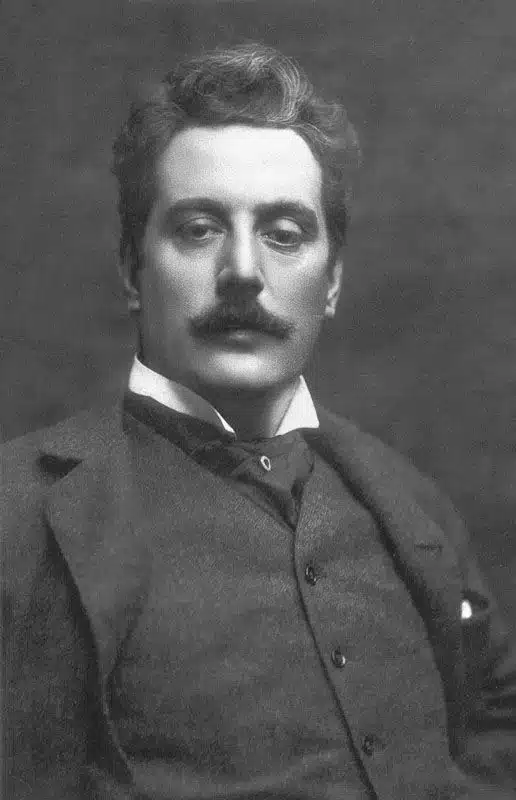
Giacomo Puccini - Agnus Dei
- Classical music composed by Giacomo Puccini 3 minutes of pure heaven. One of the most beautiful Agnus Dei compositions I ever came across. From Messa Di Gloria (1880) by Puccini. PLAY LOUD. Music expresses that which cannot be said and on which it is impossible to be silent. ~ Victor Hugo
Related Videos
Giacomo Puccini (Madame Butterfly)
Beautiful music to listen and relax. "Stum Chor" from the opera Madame Butterfly by Giacomo Puccini. edited by a.vullo
Fabio Andreotti. Giacomo Puccini. E lucevan le stelle (Tosca)
Giacomo Puccini. Aria di Cavaradossi "E lucevan le stelle" from opera "Tosca". Fabio Andreotti. Moscow camera orchestra "Musica Viva". Direttore - Valentin Uriupin
Maria Callas: O Mio Babbino Caro (Gianni Schicci) Puccini
Soprano Maria Callas sings "O Mio Babbino Caro" from "Gianni Schicchi" by Giacomo Puccini and is accompanied by the Orchestre National de L'Office de Radiodiffusion Télévision Française (L'ORTF) conducted by Georges Pretre in this 1965 video. Maria Callas (Greek: Μαρία Κάλλας) (December 2, 1923 -- September 16, 1977) was an American-born Greek dramatic coloratura soprano and perhaps the best-known opera singer of the post-World War II period. She combined an impressive bel canto technique with great dramatic gifts. An extremely versatile singer, her repertoire ranged from classical opera seria to the bel canto operas of Donizetti, Bellini, and Rossini, and further, to the works of Verdi and Puccini, and in her early career, the music dramas of Wagner. Her remarkable musical and dramatic talents led to her being hailed "La Divina." Born in New York and raised by an overbearing mother, she received her musical education in Greece and established her career in Italy. Forced to deal with the exigencies of wartime poverty and with myopia that left her nearly blind on stage, she endured struggles and scandal over the course of her career. She turned herself from a heavy woman into a glamorous one after a mid-career weight loss, which might have contributed to her vocal decline and the premature end of her career. The press exulted in publicizing Callas's allegedly temperamental behavior, her supposed rivalry with Renata Tebaldi, and her love affair with Aristotle Onassis. Her <b>...</b>
Maria Callas (Μαρία Κάλλας): Madama Butterfly - Puccini
Passing Through: www.youtube.com - Friends, Please visit my Poet friend "Passing Through's" YouTube channel: www.youtube.com , and support him - Thanks :) Un Bel Di Vedremo Madama Butterfly (Madame Butterfly) is an opera in three acts (originally two acts) by Giacomo Puccini, with an Italian libretto by Luigi Illica and Giuseppe Giacosa. The opera was based partly on a short story by John Luther Long, which was turned into a play by David Belasco; it was also based on the novel, Madame Chrysanthème (1887), by Pierre Loti. The opera belongs essentially to the city of Nagasaki, and according to American scholar Arthur Groos was based on events that actually occurred there in the early 1890s. (We appreciate Wikipaedia's contributions in the descriptions here)
O Doci Mani From Tosca By Puccini.m4v
Mr.Dodo Crisol has spent 30 years appearing in productions in Manila's performing arts scene, many of which have been reviewed and documented by the Cultural Center of the Philippines (CCP) and the national publications. These productions involve in theater, opera, oratories, Broadway musicals, concerts, symphony, chamber music, classical reader's theater, children's theater, street and ethnic theater, zarzuelas, improvisatory and experimental theater, television musicals and voicing for animation. Mr. Crisol has performed in Russia in a Russian -- French production of Verdi's LA TRAVIATA essaying the role of Alfredo. He participated in the prestigious Madame Butterfly Competitions Held in Tokyo every ten years. As actor and as a soloist of the University of the Philippines Concert Chorus, he has represented the Philippines in several international festivals such as the world theater Festival in France and music festivals in New York, San Francisco, and Chicago, USA. He has been active in the local concert circuit, promoting both Filipino and world musical and dramatic classics. He was a founding member of the Opera Company of the Philippines. He had a Music Promotion Foundation scholarship for voice and British Council scholarship grant for Community Theater. Mr. Crisol finished his opera apprenticeship with the Boston Opera Company under Ms. Sarah Caldwell and Madame Raquel Adonalyo of the Curtis Institute of Music in Philadelphia. His voice teachers were Aurelio <b>...</b>
Sumi Jo - Verdi - La Traviata - Violetta - Sempre Libera
"Ah! Fors'e lui"
"Sempre Libera"
Sokcho Summer Festival,
Sokcho, South Korea, 2005.
"Ah! Fors'e lui""Sempre Libera"
Sokcho Summer Festival,
Sokcho, South Korea, 2005.
Maria Callas - La Traviata
Maria Callas (1923-1977)
Giuseppe Verdi (1813-1901)
La traviata
E strano! E strano!...Ah, fors'è lui che l'anima...Follie! Follie!...Sempre libera
Orchestra sinfonica di Torino della RAI
Conducted by Gabriele Santini
1953
VIOLETTA (sola)
È strano! È strano! In core
scolpiti ho quegli accenti!
Saria per me sventura un serio amore?
Che risolvi, o turbata anima mia?
Null'uomo ancora t'accendeva -- O gioia
ch'io non conobbi, esser amata amando!
E sdegnarla poss'io
per l'aride follie del viver mio?
Ah, fors'è lui che l'anima
solinga ne' tumulti
godea sovente pingere
de' suoi colori occulti!
Lui che modesto e vigile
all'egre soglie ascese,
e nuova febbre accese,
destandomi all'amor.
A quell'amor ch'è palpito
dell'universo intero,
misterioso, altero,
croce e delizia al cor!
Follie! follie! Delirio vano è questo!
Povera donna, sola,
abbandonata in questo
popoloso deserto
che appellano Parigi.
Che spero or più?
Che far degg'io? Gioire,
di voluttà ne' vortici perir.
Gioir, gioir!
Sempre libera degg'io
folleggiare di gioia in gioia,
vo' che scorra il viver mio
pei sentieri del piacer.
Nasca il giorno, o il giorno muoia,
sempre lieta ne' ritrovi,
a diletti sempre nuovi
dee volare il mio pensier.
ALFREDO (sotto al balcone)
Amore, amor è palpito...
VIOLETTA
Oh!
ALFREDO
...dell'universo intero --
VIOLETTA
Oh amore.
ALFREDO
Misterioso, misterioso, altero,
croce, croce e delizia,
croce e delizia, delizia al cor.
VIOLETTA
Follie! follie! Ah sì! Gioir, gioir!
Sempre libera degg'io
folleggiare di gioia in gioia,
vo' che scorra il viver mio
pei sentieri del piacer.
Nasca il giorno, o il giorno muoia,
sempre lieta ne' ritrovi,
a diletti sempre nuovi,
dee volare il mio pensier.
ALFREDO
Amor è palpito
dell'universo --
VIOLETTA
Ah! Dee volar il mio pensier.
Ah! il mio pensier. Il mio pensier.
Maria Callas (1923-1977)Giuseppe Verdi (1813-1901)
La traviata
E strano! E strano!...Ah, fors'è lui che l'anima...Follie! Follie!...Sempre libera
Orchestra sinfonica di Torino della RAI
Conducted by Gabriele Santini
1953
VIOLETTA (sola)
È strano! È strano! In core
scolpiti ho quegli accenti!
Saria per me sventura un serio amore?
Che risolvi, o turbata anima mia?
Null'uomo ancora t'accendeva -- O gioia
ch'io non conobbi, esser amata amando!
E sdegnarla poss'io
per l'aride follie del viver mio?
Ah, fors'è lui che l'anima
solinga ne' tumulti
godea sovente pingere
de' suoi colori occulti!
Lui che modesto e vigile
all'egre soglie ascese,
e nuova febbre accese,
destandomi all'amor.
A quell'amor ch'è palpito
dell'universo intero,
misterioso, altero,
croce e delizia al cor!
Follie! follie! Delirio vano è questo!
Povera donna, sola,
abbandonata in questo
popoloso deserto
che appellano Parigi.
Che spero or più?
Che far degg'io? Gioire,
di voluttà ne' vortici perir.
Gioir, gioir!
Sempre libera degg'io
folleggiare di gioia in gioia,
vo' che scorra il viver mio
pei sentieri del piacer.
Nasca il giorno, o il giorno muoia,
sempre lieta ne' ritrovi,
a diletti sempre nuovi
dee volare il mio pensier.
ALFREDO (sotto al balcone)
Amore, amor è palpito...
VIOLETTA
Oh!
ALFREDO
...dell'universo intero --
VIOLETTA
Oh amore.
ALFREDO
Misterioso, misterioso, altero,
croce, croce e delizia,
croce e delizia, delizia al cor.
VIOLETTA
Follie! follie! Ah sì! Gioir, gioir!
Sempre libera degg'io
folleggiare di gioia in gioia,
vo' che scorra il viver mio
pei sentieri del piacer.
Nasca il giorno, o il giorno muoia,
sempre lieta ne' ritrovi,
a diletti sempre nuovi,
dee volare il mio pensier.
ALFREDO
Amor è palpito
dell'universo --
VIOLETTA
Ah! Dee volar il mio pensier.
Ah! il mio pensier. Il mio pensier.
Luciano Pavarotti - La Donna è Mobile Rigoletto
The "king" Luciano Pavarotti as Il Duca di Mantova in the screen movie "Rigoletto" (1983) based on Giuseppe Verdi's opera with the same name (1851).
La Donna è Mobile - Giuseppe Verdi
La donna è mobile
Qual piuma al vento
Muta d'accento
E di pensiero
Sempre un'amabile
Leggiadro viso
In pianto o in riso
È menzognero
La donna è mobil
Qual piuma al vento
Muta d'accento
E di pensier
E di pensier
E di pensier
è sempre misero
Chi a lei s'affida
Chi le confida
Mal cauto il core
Pur mai non sentesi
Felice appieno
Chi su quel seno
Non liba amore
La donna è mobil
Qual piuma al vento
Muta d'accento
E di pensier
E di pensier
E di pensier...
The "king" Luciano Pavarotti as Il Duca di Mantova in the screen movie "Rigoletto" (1983) based on Giuseppe Verdi's opera with the same name (1851).La Donna è Mobile - Giuseppe Verdi
La donna è mobile
Qual piuma al vento
Muta d'accento
E di pensiero
Sempre un'amabile
Leggiadro viso
In pianto o in riso
È menzognero
La donna è mobil
Qual piuma al vento
Muta d'accento
E di pensier
E di pensier
E di pensier
è sempre misero
Chi a lei s'affida
Chi le confida
Mal cauto il core
Pur mai non sentesi
Felice appieno
Chi su quel seno
Non liba amore
La donna è mobil
Qual piuma al vento
Muta d'accento
E di pensier
E di pensier
E di pensier...
Gracia - William Tell Overture
Rossini's classical piece performed by three talented violin player ladies from Hungary
Kings College Faure Pie Jesu and Agnus Dei
Kings College Chapel Choir Cambridge, 1987, performs Faure's Requiem. Here's the Pieu Jesu and Agnus Dei.
Faure - Agnus Dei
Gabriel Faure's "Agnus Dei" from Requiem in D Minor Op.48 Written between 1887 and 1890
Britten - War Requiem - Agnus Dei
Playlist of all four parts of War Requiem: www.youtube.com The War Requiem, Op. 66 is a large-scale, non-liturgical setting of the Requiem Mass composed by Benjamin Britten in 1962. Interspersed with the traditional Latin texts are pasted, collage-like, settings of Wilfred Owen poems. The work is scored for soprano, tenor and baritone soloists, chorus, boys' choir, organ, and two orchestras (a full orchestra and a chamber orchestra). The War Requiem was commissioned for the reconsecration of Coventry Cathedral on May 30, 1962 after the original fourteenth century structure was destroyed in a World War II bombing raid on the night of November 14, 1940. As a pacifist, Britten was inspired by the commission, which gave him complete freedom in choosing the type of music he would like to compose. He conceived of setting the traditional Latin Mass for the Dead interwoven with nine poems about war by the English poet Wilfred Owen. Owen, who was born in 1893, was serving as the commander of a rifle company when he was killed in action on 4 November 1918 during the crossing of the Sambre-Oise Canal in France, just one week before the Armistice. Although he was virtually unknown at the time of his death, he has subsequently come to be revered as one of the great war poets. en.wikipedia.org Agnus Dei: Agnus Dei (chorus) interspersed with "One ever hangs" (chorus; tenor solo) One ever hangs where shelled roads part. In this war He too lost a limb, But His disciples hide apart; And <b>...</b>
"Requiem - Agnus Dei et Lux aeterna" by Gabriel Faure (Chapman Sym
Chapman Symphony Orchestra, Spring 07 Music Director, Daniel Alfred Wachs Conservatory of Music at Chapman University Orange, CA www.chapman.edu
Edson Cordeiro - Cold Song - 2008 Teddy Awards
Edson Cordeiro sings this Purcell classic at the 2008 Teddy Awards, as a tribute to the late German singer Klaus Nomi.