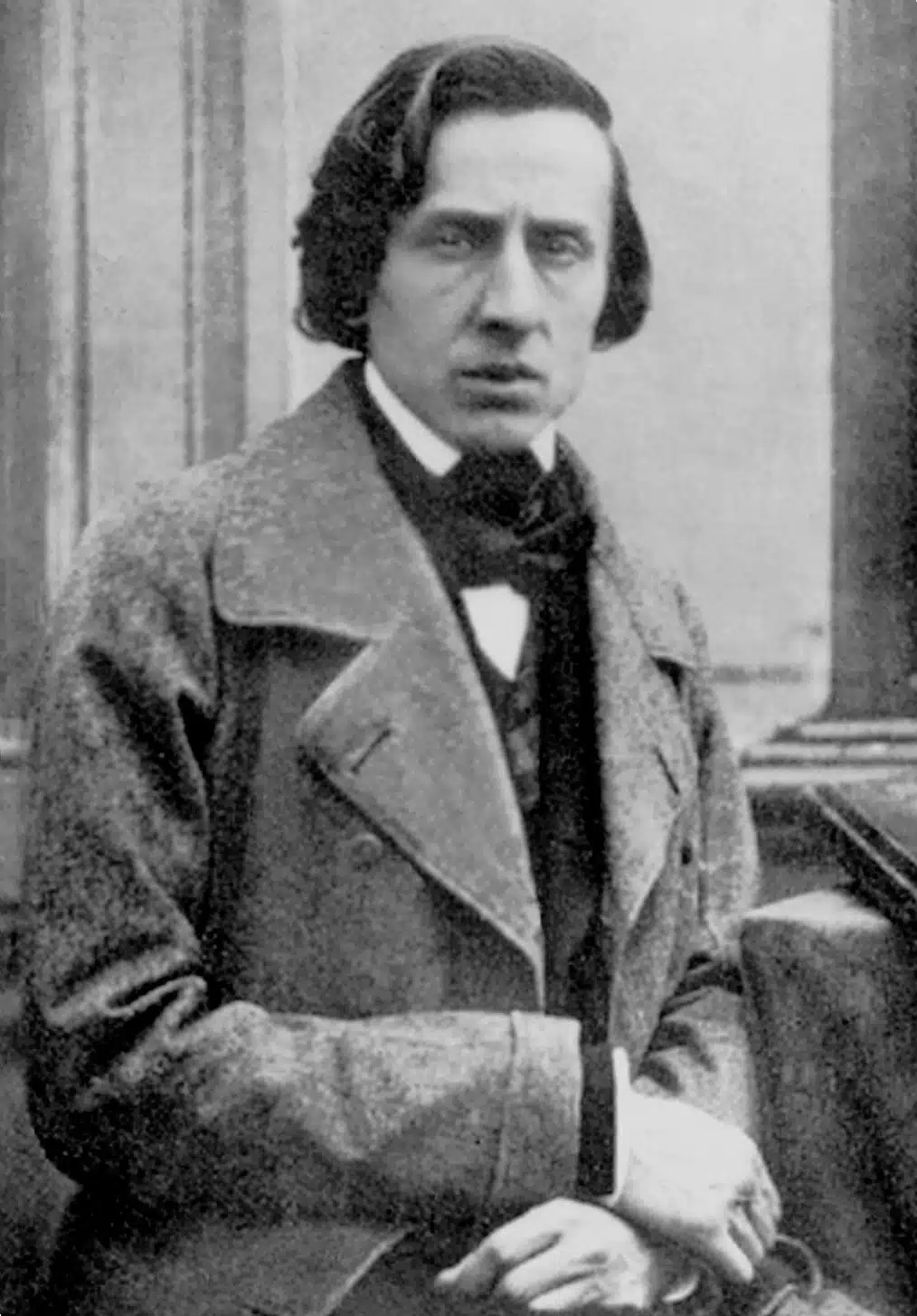
Frederic Chopin - Waltz No 19 in A Minor
- Classical music composed by Frédéric Chopin This is Waltz Op. posthumous No. 19 in A minor, composed by Frederic Chopin. I performed this after two years of learning playing piano (from the scratch). This piece was used as a theme in the Chopin - Desire for Love movie: www.youtube.com There is even a song based on this waltz performed by Edyta Geppert, named 'Na krakowskim, czy w Nohant'. So, if you are not a big fan of classical music, but have got an impression you have heard this song before (and wondering where), this may be the answer. You can download the piano scores from here: icking-music-archive.org
Related Videos
Frédéric Chopin - Prelude in E-Minor (op.28 no. 4)
Frédéric Chopin-Prelude in E-Minor (op.28 no. 4) Played by: Aldona Dvarionaite Fryderyk Chopin (Polish: Fryderyk [Franciszek] Chopin, sometimes Szopen; French: Frédéric [François] Chopin;March 1, 1810 -- October 17, 1849) was a Polish virtuoso pianist and piano composer of the Romantic period. He is widely regarded as the greatest Polish composer, and one of the most influential composers for piano in the 19th century. Chopin was a genius of universal appeal. His music conquers the most diverse audiences. When the first notes of Chopin sound through the concert hall there is a happy sigh of recognition. All over the world men and women know his music. They love it. They are moved by it. Yet it is not "Romantic music" in the Byronic sense. It does not tell stories or paint pictures. It is expressive and personal, but still a pure art. Even in this abstract atomic age, where emotion is not fashionable, Chopin endures. His music is the universal language of human communication. When I play Chopin I know I speak directly to the hearts of people! Chopin's music for the piano combined a unique rhythmic sense (particularly his use of rubato), frequent use of chromaticism, and counterpoint. This mixture produces a particularly fragile sound in the melody and the harmony, which are nonetheless underpinned by solid and interesting harmonic techniques. He took the new salon genre of the nocturne, invented by Irish composer John Field, to a deeper level of sophistication. Three of <b>...</b>
Victor Borge (Pyotr Tchaikovsky, Frederic Chopin, Johannes Brahms, F
Victor Borge is an enigma for me. Though many would consider him to be simply a clown, albeit a clown spoofing classical music, some of his work is, to say the least, strikingly acute and tantalizingly interesting. The present piece is proof of this. The variations form is well-known and appears in virtually any classical music period. It would seem almost impossible to do anything new with the form but Borge proves us wrong by adopting a very unusual approach. He chooses a painstakingly well-known theme, here - "Happy birthday to you", and sets about to create variations to it. But it is only the top of the iceberg: each variation is, effectually, the way a certain composer would write the theme itself. All in all, there are eleven variations of very different composers: we start by passing through Bach and Mozart and finish with Irving and some modern composer whose name I do not know (and Borge's hilarious pronunciation does not help :P). Some of these variations are preceded by a snatch on the composer's original work from which Borge then proceeds to develop the variation. Moreover, some of his variations are rather charming (Brahms or Bach (in spite of a ridiculously humorous long descending line repeated two times)) or even, dare I say it, moving (Beethoven, in spite of some goofing on Borge's part, gets one of the better treatments). I've marked the movements in the video itself but you can also check the title which includes all composers presented in the order <b>...</b>
Dang Truong Giang plays Waltz in A minor Op. Posth by Frederic Chopi
This delicate, haunting Waltz in another work that adds to the mystery and mastery of Chopin. This Waltz has long been a favorite of amateur pianists, as its one of the least difficult pieces of Chopins to play. Well, the NOTES may not be hard, but the FEELING? Rarely is this piece performed with such sensitivity, transparency and grace. Now, for the mystery part: There is a lot of confusion over the title and date of this Waltz. It was published after Chopins death, and therefore carries no opus number (It is not to be confused with the Waltz in A Minor, Op. 34, No. 2). In fact, the most popular published score didnt appear until 1955! So, i try to transcript this beautiful piece for classic guitar solo. Hope you enjoy!
Frederic Chopin - Nocturne in E-flat major Op. 9 No. 2
HAPPY BELATED NEW YEARS! XD To start off 2008 with something special and interesting, I've decided to present to you my VERY FIRST CLASSICAL video on YouTube! This is my all-time favorite nocturne by Chopin. I learned this with the help of my piano teacher when I was 10, and when I recently found the sheet music to it again, I sight read it so I could play it for YouTube. **SHEET MUSIC** www.sheetmusicarchive.net Under 'Chopin' in the left hand side, scroll down until you find the right nocturne. :D ENJOY! :)
Chopin Mazurka op17 No 4 - Michel Mananes Live
Michel Mananes plays one of the most beautiful Chopin Mazurka No 4 op.17 A minor 13 .All this pieces are played in an "Antique Bosendorfer". With recitals for europa and suramerica specially. He won first prize in several young piano competitions. He is Piano Teacher in Madrid and continue to give concerts.Chopin Mazurca.classical concert pianist.
http://www.geocities.com/pianistmananes/index.html
Frederic Chopin - March 1, 1810[1] -- October 17, 1849) was a Polish[2][3] composer and virtuoso pianist of the Romantic period. He is widely regarded as the greatest Polish composer, and ranks as one of music's greatest tone poets.[4]
He was born in the village of Żelazowa Wola, in the Duchy of Warsaw, to a Polish mother and French-expatriate father, and in his early life was regarded as a child-prodigy pianist. In November 1830, at the age of 20, Chopin went abroad; following the suppression of the Polish November Uprising of 1830--31, he became one of many expatriates of the Polish "Great Emigration."
In Paris, he made a comfortable living as a composer and piano teacher, while giving few public performances. A Polish patriot,[5][6] in France he used the French versions of his names and eventually, to avoid having to rely on Imperial Russian documents, became a French citizen.[7][8][9] After some ill-fated romantic involvements with Polish women, from 1837 to 1847 he conducted a turbulent relationship with the French writer George Sand (Aurore Dudevant). Always in frail health, in 1849 he died in Paris, at the age of 39, of chronic pulmonary tuberculosis.[10][11]
Chopin's extant compositions were written primarily for the piano as a solo instrument. Though technically demanding, Chopin's style emphasizes nuance and expressive depth rather than virtuosity. Chopin invented musical forms such as the ballade[12] and was responsible for major innovations in forms such as the piano sonata, waltz, nocturne, étude, impromptu and prelude. His works are mainstays of Romanticism in 19th-century classical music.
Chopin composed 58 Mazurkas (there seem to be at least another 2 unfinished sketches) and many of his other works of different genres are either inspired by the Mazurka or have parts of Mazurkas within them. Chopin did, of course, not invent the Mazurka form. However, it was he alone who put the Mazurka on the public stage and refined it into the highest art of music. In his Mazurkas, you get to know the very soul of Poland and Chopin never forgot his home land or the poor farmers singing the Mazurkas during the time of harvest. Chopin started his composing with a Polonaise and ended with a Mazurka, thus closing the circle.
Michel Mananes plays one of the most beautiful Chopin Mazurka No 4 op.17 A minor 13 .All this pieces are played in an "Antique Bosendorfer". With recitals for europa and suramerica specially. He won first prize in several young piano competitions. He is Piano Teacher in Madrid and continue to give concerts.Chopin Mazurca.classical concert pianist.http://www.geocities.com/pianistmananes/index.html
Frederic Chopin - March 1, 1810[1] -- October 17, 1849) was a Polish[2][3] composer and virtuoso pianist of the Romantic period. He is widely regarded as the greatest Polish composer, and ranks as one of music's greatest tone poets.[4]
He was born in the village of Żelazowa Wola, in the Duchy of Warsaw, to a Polish mother and French-expatriate father, and in his early life was regarded as a child-prodigy pianist. In November 1830, at the age of 20, Chopin went abroad; following the suppression of the Polish November Uprising of 1830--31, he became one of many expatriates of the Polish "Great Emigration."
In Paris, he made a comfortable living as a composer and piano teacher, while giving few public performances. A Polish patriot,[5][6] in France he used the French versions of his names and eventually, to avoid having to rely on Imperial Russian documents, became a French citizen.[7][8][9] After some ill-fated romantic involvements with Polish women, from 1837 to 1847 he conducted a turbulent relationship with the French writer George Sand (Aurore Dudevant). Always in frail health, in 1849 he died in Paris, at the age of 39, of chronic pulmonary tuberculosis.[10][11]
Chopin's extant compositions were written primarily for the piano as a solo instrument. Though technically demanding, Chopin's style emphasizes nuance and expressive depth rather than virtuosity. Chopin invented musical forms such as the ballade[12] and was responsible for major innovations in forms such as the piano sonata, waltz, nocturne, étude, impromptu and prelude. His works are mainstays of Romanticism in 19th-century classical music.
Chopin composed 58 Mazurkas (there seem to be at least another 2 unfinished sketches) and many of his other works of different genres are either inspired by the Mazurka or have parts of Mazurkas within them. Chopin did, of course, not invent the Mazurka form. However, it was he alone who put the Mazurka on the public stage and refined it into the highest art of music. In his Mazurkas, you get to know the very soul of Poland and Chopin never forgot his home land or the poor farmers singing the Mazurkas during the time of harvest. Chopin started his composing with a Polonaise and ended with a Mazurka, thus closing the circle.
Hannah plays Chopin Nocturne 20 in C Sharp Minor
8 year old Hannah Hua plays Chopin Nocturne #20 in C Sharp Minor on Oct 7, 2006.
Patricio Molina Chopin Scherzo No4
PATRICIO MOLINA - www.patriciomolina.cl
A Concert in NJPAC (New Jersey Performing Art Center), in Newark 2006.
Concierto en NJPAC (Centro de Actuacion y Artes de New Jersey), en Newark 2006.
Fryderyk Chopin (Polish: Fryderyk [Franciszek] Chopin, sometimes Szopen; French: Frédéric [François] Chopin; surname pronunciation in English: IPA: /ˈʃoʊpæn/, in French: IPA: [ʃɔpɛ̃]; March 1, 1810[1] -- October 17, 1849) was a Polish[2][3] composer and virtuoso pianist of the Romantic period. He is widely regarded as the greatest Polish composer, and ranks as one of music's greatest tone poets by reason of superfine imagination and fastidious craftsmanship.[4]
Chopin was born in the village of Żelazowa Wola, in the Duchy of Warsaw, to a Polish mother and French-expatriate father, and in his early life was regarded as a child-prodigy pianist. In November 1830, at the age of 20, Chopin went abroad; following the suppression of the Polish November Uprising of 1830--31, he became one of many expatriates of the Polish "Great Emigration."
In Paris, Chopin made a comfortable living as a composer and piano teacher, while giving few public performances. An ardent Polish patriot,[5] in France he used the French versions of his given names and eventually, to avoid having to rely on Imperial Russian documents, became a French citizen.[6][7][8] After some ill-fated romantic involvements with Polish ladies, from 1837 to 1847 he conducted a turbulent relationship with the French writer George Sand (Aurore Dudevant). Always in frail health, he died in Paris, at the age of 39, of chronic pulmonary tuberculosis.[9]
Chopin's extant compositions were written primarily for the piano as a solo instrument. Though technically demanding, Chopin's style emphasizes nuance and expressive depth rather than virtuosity. Chopin invented musical forms such as the ballade[10] and was responsible for major innovations in forms such as the piano sonata, waltz, nocturne, étude, impromptu and prelude. His works are mainstays of Romanticism in 19th-century classical music. His mazureks and polonaises are touchstones of Polish national classic music.
PATRICIO MOLINA - www.patriciomolina.clA Concert in NJPAC (New Jersey Performing Art Center), in Newark 2006.
Concierto en NJPAC (Centro de Actuacion y Artes de New Jersey), en Newark 2006.
Fryderyk Chopin (Polish: Fryderyk [Franciszek] Chopin, sometimes Szopen; French: Frédéric [François] Chopin; surname pronunciation in English: IPA: /ˈʃoʊpæn/, in French: IPA: [ʃɔpɛ̃]; March 1, 1810[1] -- October 17, 1849) was a Polish[2][3] composer and virtuoso pianist of the Romantic period. He is widely regarded as the greatest Polish composer, and ranks as one of music's greatest tone poets by reason of superfine imagination and fastidious craftsmanship.[4]
Chopin was born in the village of Żelazowa Wola, in the Duchy of Warsaw, to a Polish mother and French-expatriate father, and in his early life was regarded as a child-prodigy pianist. In November 1830, at the age of 20, Chopin went abroad; following the suppression of the Polish November Uprising of 1830--31, he became one of many expatriates of the Polish "Great Emigration."
In Paris, Chopin made a comfortable living as a composer and piano teacher, while giving few public performances. An ardent Polish patriot,[5] in France he used the French versions of his given names and eventually, to avoid having to rely on Imperial Russian documents, became a French citizen.[6][7][8] After some ill-fated romantic involvements with Polish ladies, from 1837 to 1847 he conducted a turbulent relationship with the French writer George Sand (Aurore Dudevant). Always in frail health, he died in Paris, at the age of 39, of chronic pulmonary tuberculosis.[9]
Chopin's extant compositions were written primarily for the piano as a solo instrument. Though technically demanding, Chopin's style emphasizes nuance and expressive depth rather than virtuosity. Chopin invented musical forms such as the ballade[10] and was responsible for major innovations in forms such as the piano sonata, waltz, nocturne, étude, impromptu and prelude. His works are mainstays of Romanticism in 19th-century classical music. His mazureks and polonaises are touchstones of Polish national classic music.
Sumi Jo - Verdi - La Traviata - Violetta - Sempre Libera
"Ah! Fors'e lui"
"Sempre Libera"
Sokcho Summer Festival,
Sokcho, South Korea, 2005.
"Ah! Fors'e lui""Sempre Libera"
Sokcho Summer Festival,
Sokcho, South Korea, 2005.
Maria Callas - La Traviata
Maria Callas (1923-1977)
Giuseppe Verdi (1813-1901)
La traviata
E strano! E strano!...Ah, fors'è lui che l'anima...Follie! Follie!...Sempre libera
Orchestra sinfonica di Torino della RAI
Conducted by Gabriele Santini
1953
VIOLETTA (sola)
È strano! È strano! In core
scolpiti ho quegli accenti!
Saria per me sventura un serio amore?
Che risolvi, o turbata anima mia?
Null'uomo ancora t'accendeva -- O gioia
ch'io non conobbi, esser amata amando!
E sdegnarla poss'io
per l'aride follie del viver mio?
Ah, fors'è lui che l'anima
solinga ne' tumulti
godea sovente pingere
de' suoi colori occulti!
Lui che modesto e vigile
all'egre soglie ascese,
e nuova febbre accese,
destandomi all'amor.
A quell'amor ch'è palpito
dell'universo intero,
misterioso, altero,
croce e delizia al cor!
Follie! follie! Delirio vano è questo!
Povera donna, sola,
abbandonata in questo
popoloso deserto
che appellano Parigi.
Che spero or più?
Che far degg'io? Gioire,
di voluttà ne' vortici perir.
Gioir, gioir!
Sempre libera degg'io
folleggiare di gioia in gioia,
vo' che scorra il viver mio
pei sentieri del piacer.
Nasca il giorno, o il giorno muoia,
sempre lieta ne' ritrovi,
a diletti sempre nuovi
dee volare il mio pensier.
ALFREDO (sotto al balcone)
Amore, amor è palpito...
VIOLETTA
Oh!
ALFREDO
...dell'universo intero --
VIOLETTA
Oh amore.
ALFREDO
Misterioso, misterioso, altero,
croce, croce e delizia,
croce e delizia, delizia al cor.
VIOLETTA
Follie! follie! Ah sì! Gioir, gioir!
Sempre libera degg'io
folleggiare di gioia in gioia,
vo' che scorra il viver mio
pei sentieri del piacer.
Nasca il giorno, o il giorno muoia,
sempre lieta ne' ritrovi,
a diletti sempre nuovi,
dee volare il mio pensier.
ALFREDO
Amor è palpito
dell'universo --
VIOLETTA
Ah! Dee volar il mio pensier.
Ah! il mio pensier. Il mio pensier.
Maria Callas (1923-1977)Giuseppe Verdi (1813-1901)
La traviata
E strano! E strano!...Ah, fors'è lui che l'anima...Follie! Follie!...Sempre libera
Orchestra sinfonica di Torino della RAI
Conducted by Gabriele Santini
1953
VIOLETTA (sola)
È strano! È strano! In core
scolpiti ho quegli accenti!
Saria per me sventura un serio amore?
Che risolvi, o turbata anima mia?
Null'uomo ancora t'accendeva -- O gioia
ch'io non conobbi, esser amata amando!
E sdegnarla poss'io
per l'aride follie del viver mio?
Ah, fors'è lui che l'anima
solinga ne' tumulti
godea sovente pingere
de' suoi colori occulti!
Lui che modesto e vigile
all'egre soglie ascese,
e nuova febbre accese,
destandomi all'amor.
A quell'amor ch'è palpito
dell'universo intero,
misterioso, altero,
croce e delizia al cor!
Follie! follie! Delirio vano è questo!
Povera donna, sola,
abbandonata in questo
popoloso deserto
che appellano Parigi.
Che spero or più?
Che far degg'io? Gioire,
di voluttà ne' vortici perir.
Gioir, gioir!
Sempre libera degg'io
folleggiare di gioia in gioia,
vo' che scorra il viver mio
pei sentieri del piacer.
Nasca il giorno, o il giorno muoia,
sempre lieta ne' ritrovi,
a diletti sempre nuovi
dee volare il mio pensier.
ALFREDO (sotto al balcone)
Amore, amor è palpito...
VIOLETTA
Oh!
ALFREDO
...dell'universo intero --
VIOLETTA
Oh amore.
ALFREDO
Misterioso, misterioso, altero,
croce, croce e delizia,
croce e delizia, delizia al cor.
VIOLETTA
Follie! follie! Ah sì! Gioir, gioir!
Sempre libera degg'io
folleggiare di gioia in gioia,
vo' che scorra il viver mio
pei sentieri del piacer.
Nasca il giorno, o il giorno muoia,
sempre lieta ne' ritrovi,
a diletti sempre nuovi,
dee volare il mio pensier.
ALFREDO
Amor è palpito
dell'universo --
VIOLETTA
Ah! Dee volar il mio pensier.
Ah! il mio pensier. Il mio pensier.
Luciano Pavarotti - La Donna è Mobile Rigoletto
The "king" Luciano Pavarotti as Il Duca di Mantova in the screen movie "Rigoletto" (1983) based on Giuseppe Verdi's opera with the same name (1851).
La Donna è Mobile - Giuseppe Verdi
La donna è mobile
Qual piuma al vento
Muta d'accento
E di pensiero
Sempre un'amabile
Leggiadro viso
In pianto o in riso
È menzognero
La donna è mobil
Qual piuma al vento
Muta d'accento
E di pensier
E di pensier
E di pensier
è sempre misero
Chi a lei s'affida
Chi le confida
Mal cauto il core
Pur mai non sentesi
Felice appieno
Chi su quel seno
Non liba amore
La donna è mobil
Qual piuma al vento
Muta d'accento
E di pensier
E di pensier
E di pensier...
The "king" Luciano Pavarotti as Il Duca di Mantova in the screen movie "Rigoletto" (1983) based on Giuseppe Verdi's opera with the same name (1851).La Donna è Mobile - Giuseppe Verdi
La donna è mobile
Qual piuma al vento
Muta d'accento
E di pensiero
Sempre un'amabile
Leggiadro viso
In pianto o in riso
È menzognero
La donna è mobil
Qual piuma al vento
Muta d'accento
E di pensier
E di pensier
E di pensier
è sempre misero
Chi a lei s'affida
Chi le confida
Mal cauto il core
Pur mai non sentesi
Felice appieno
Chi su quel seno
Non liba amore
La donna è mobil
Qual piuma al vento
Muta d'accento
E di pensier
E di pensier
E di pensier...
Gracia - William Tell Overture
Rossini's classical piece performed by three talented violin player ladies from Hungary
Johann Strauss II - The Blue Danube Waltz
Title : Johann Strauss II , The Blue Danube Waltz
Date : 1867
From Wikipedia,The Blue Danube is the common English title of An der schönen blauen Donau op. 314 (On the Beautiful Blue Danube), a waltz by Johann Strauss II, composed in 1867. Originally performed 9 February 1867 at a concert of the Wiener Männergesangsverein (Vienna Men's Choral Association), it has been one of the most consistently popular pieces of music in the classical repertoire. Its initial performance was only a mild success, however, and Strauss is reputed to have said "The devil take the waltz, my only regret is for the coda -- I wish that had been a success!"
The waltz originally had an accompanying song text written by Josef Weyl. Strauss adapted it into a purely orchestral version for the World's Fair in Paris that same year, and it became a great success in this form. The instrumental version is by far the most commonly performed today. An alternate text by Franz von Gernerth, Donau so blau (Danube so blue), is also used on occasion.
The sentimental Viennese connotations of the piece have made it into a sort of unofficial Austrian national anthem. It is a traditional encore piece at the annual Vienna New Year's Concert. The first few bars are also the interval signal of Osterreich Rundfunk's overseas programs.
It is reported by composer Norman Lloyd in his "Golden Encyclopedia of Music" that when asked by Frau Strauss for an autograph, the composer Johannes Brahms autographed Mrs. Strauss's fan by writing on it the first few bars of the Blue Danube. Under it he wrote "Unfortunately not by Johannes Brahms".The work commences with an extended introduction in the key of A major with shimmering (tremolo) violins and a French horn spelling out the familiar waltz theme, answered by staccato wind chords, in a subdued mood. It rises briefly into a loud passage but quickly dies down into the same restful nature of the opening bars. A contrasting and quick phrase in D major anticipates the waltz before 3 quiet downward-moving bass notes "usher in" the first principal waltz melody.
The first waltz theme is familiar gently rising triad motif in cellos and horns in the tonic D major, accompanied by harps; the Viennese waltz beat is accentuated at the end of each 3-note phrase. The Waltz 1A triumphantly ends its rounds of the motif, and waltz 1B follows in the same key; the genial mood is still apparent.
Waltz 2A glides in quietly (still in D major) before a short contrasting middle section in B flat major. The entire section is repeated.
A more dour waltz 3A is introduced in G major before a fleeting eighth-note melodic phrase (waltz 3B). An loud Intrada (introduction) is then played. Waltz 4A starts off in a romantic mood (F major) before a more joyous waltz 4B in the same key.
After another short Intrada in A, cadencing in F-sharp minor, sonorous clarinets spell out the poignant melody of waltz 5A in A. Waltz 5B is the climax, punctuated by cymbal crashes. Each of these may be repeated at the discretion of the performer.
The coda recalls earlier sections (3A and 2A) before furious chords usher in a recap of the romantic Waltz 4A. The idyll is cut short as the waltz hurries back to the famous waltz theme 1A again. This statement is cut short, however, by the final codetta: a variation of 1A is presented, connecting to a rushing eighth-note passage in the final few bars: repeated tonic chords underlined by a snare drumroll and a bright-sounding flourish.
Title : Johann Strauss II , The Blue Danube WaltzDate : 1867
From Wikipedia,The Blue Danube is the common English title of An der schönen blauen Donau op. 314 (On the Beautiful Blue Danube), a waltz by Johann Strauss II, composed in 1867. Originally performed 9 February 1867 at a concert of the Wiener Männergesangsverein (Vienna Men's Choral Association), it has been one of the most consistently popular pieces of music in the classical repertoire. Its initial performance was only a mild success, however, and Strauss is reputed to have said "The devil take the waltz, my only regret is for the coda -- I wish that had been a success!"
The waltz originally had an accompanying song text written by Josef Weyl. Strauss adapted it into a purely orchestral version for the World's Fair in Paris that same year, and it became a great success in this form. The instrumental version is by far the most commonly performed today. An alternate text by Franz von Gernerth, Donau so blau (Danube so blue), is also used on occasion.
The sentimental Viennese connotations of the piece have made it into a sort of unofficial Austrian national anthem. It is a traditional encore piece at the annual Vienna New Year's Concert. The first few bars are also the interval signal of Osterreich Rundfunk's overseas programs.
It is reported by composer Norman Lloyd in his "Golden Encyclopedia of Music" that when asked by Frau Strauss for an autograph, the composer Johannes Brahms autographed Mrs. Strauss's fan by writing on it the first few bars of the Blue Danube. Under it he wrote "Unfortunately not by Johannes Brahms".The work commences with an extended introduction in the key of A major with shimmering (tremolo) violins and a French horn spelling out the familiar waltz theme, answered by staccato wind chords, in a subdued mood. It rises briefly into a loud passage but quickly dies down into the same restful nature of the opening bars. A contrasting and quick phrase in D major anticipates the waltz before 3 quiet downward-moving bass notes "usher in" the first principal waltz melody.
The first waltz theme is familiar gently rising triad motif in cellos and horns in the tonic D major, accompanied by harps; the Viennese waltz beat is accentuated at the end of each 3-note phrase. The Waltz 1A triumphantly ends its rounds of the motif, and waltz 1B follows in the same key; the genial mood is still apparent.
Waltz 2A glides in quietly (still in D major) before a short contrasting middle section in B flat major. The entire section is repeated.
A more dour waltz 3A is introduced in G major before a fleeting eighth-note melodic phrase (waltz 3B). An loud Intrada (introduction) is then played. Waltz 4A starts off in a romantic mood (F major) before a more joyous waltz 4B in the same key.
After another short Intrada in A, cadencing in F-sharp minor, sonorous clarinets spell out the poignant melody of waltz 5A in A. Waltz 5B is the climax, punctuated by cymbal crashes. Each of these may be repeated at the discretion of the performer.
The coda recalls earlier sections (3A and 2A) before furious chords usher in a recap of the romantic Waltz 4A. The idyll is cut short as the waltz hurries back to the famous waltz theme 1A again. This statement is cut short, however, by the final codetta: a variation of 1A is presented, connecting to a rushing eighth-note passage in the final few bars: repeated tonic chords underlined by a snare drumroll and a bright-sounding flourish.
Chopin Minute Waltz Op 64 No 1
This waltz is one of my all time favorite pieces to play! Chopin is incredible and I've been wanting to rerecord a decent version of minute waltz with my current equipment. I also want to send a HUGE thank you to God for allowing me to play the minute waltz again after a time where I was too sick to even play anything let alone Chopin. This really is a huge deal for me to play this waltz again! I hope you enjoy and have fun listening to some classic Chopin!!
Johann Strauss II - The Blue Danube Waltz
Title : Johann Strauss II , The Blue Danube Waltz Date : 1867 From Wikipedia,The Blue Danube is the common English title of An der schönen blauen Donau op. 314 (On the Beautiful Blue Danube), a waltz by Johann Strauss II, composed in 1867. Originally performed 9 February 1867 at a concert of the Wiener Männergesangsverein (Vienna Men's Choral Association), it has been one of the most consistently popular pieces of music in the classical repertoire. Its initial performance was only a mild success, however, and Strauss is reputed to have said "The devil take the waltz, my only regret is for the coda -- I wish that had been a success!" The waltz originally had an accompanying song text written by Josef Weyl. Strauss adapted it into a purely orchestral version for the World's Fair in Paris that same year, and it became a great success in this form. The instrumental version is by far the most commonly performed today. An alternate text by Franz von Gernerth, Donau so blau (Danube so blue), is also used on occasion. The sentimental Viennese connotations of the piece have made it into a sort of unofficial Austrian national anthem. It is a traditional encore piece at the annual Vienna New Year's Concert. The first few bars are also the interval signal of Osterreich Rundfunk's overseas programs. It is reported by composer Norman Lloyd in his "Golden Encyclopedia of Music" that when asked by Frau Strauss for an autograph, the composer Johannes Brahms autographed Mrs. Strauss's fan <b>...</b>
Rachmaninoff - Vocalise For Violin
Title : Sergei Rachmaninov, Vocalise (Songs (14), Op. 34: no 14)
From Wikipedia,Vocalise, Op. 34 No. 14 is a song by Sergei Rachmaninoff, published in 1912 as the last of his Fourteen Songs, Opus 34. Written for voice (soprano or tenor) with piano accompaniment, it contains no words, but is sung using any one vowel (of the singer's choosing). It was dedicated to soprano Antonina Nezhdanova.
Although the original publication stipulates that the song may be sung by either soprano or tenor voice, it is usually chosen to be performed by a soprano. As with many classical vocal pieces, it is transcribed in a variety of keys, allowing the performer to choose a vocal range more suitable to their natural voice, so that artists who may not have the higher range of a soprano can nevertheless perform the song. When sung by a tenor, it is sung an octave lower than the same key when sung by a soprano.
Title : Sergei Rachmaninov, Vocalise (Songs (14), Op. 34: no 14)From Wikipedia,Vocalise, Op. 34 No. 14 is a song by Sergei Rachmaninoff, published in 1912 as the last of his Fourteen Songs, Opus 34. Written for voice (soprano or tenor) with piano accompaniment, it contains no words, but is sung using any one vowel (of the singer's choosing). It was dedicated to soprano Antonina Nezhdanova.
Although the original publication stipulates that the song may be sung by either soprano or tenor voice, it is usually chosen to be performed by a soprano. As with many classical vocal pieces, it is transcribed in a variety of keys, allowing the performer to choose a vocal range more suitable to their natural voice, so that artists who may not have the higher range of a soprano can nevertheless perform the song. When sung by a tenor, it is sung an octave lower than the same key when sung by a soprano.
Summertime - Piano Improvisation
at the moment I live in Germany and here the summer is nearly always much humid one (RAIN), I hatred this type of summer and I have tried this my version of "Summertime" what mean's for me this 2007 German much rain summer.
Many of his compositions have been used on television and in numerous films, and many became jazz standards. The jazz singer Ella Fitzgerald recorded many of the Gershwins' songs on her 1959 Gershwin Songbook (arranged by Nelson Riddle). Countless singers and musicians have recorded Gershwin songs, including Fred Astaire, Louis Armstrong, Al Jolson, Bobby Darin, Art Tatum, Bing Crosby, Janis Joplin, John Coltrane, Frank Sinatra, Billie Holiday, Sam Cooke, Miles Davis, Herbie Hancock, Madonna, Judy Garland, Julie Andrews, Barbra Streisand, Marni Nixon, Natalie Cole, Patti Austin, Nina Simone, Maureen McGovern, John Fahey, The Residents, Sublime, and Sting.
About the composer:
George Gershwin (September 26, 1898 July 11, 1937) was an American composer and pianist whose early death brought to a premature halt one of the most remarkable careers in American music. Gershwin's compositions spanned both popular and classical genres, and his most popular melodies are universally familiar. He wrote most of his vocal and theatrical works in collaboration with his elder brother, lyricist Ira Gershwin. George Gershwin composed music for both Broadway and the classical concert hall, as well as popular songs that brought his work to an even wider public.
Gershwin's compositions have been used in numerous films and on television, and many became jazz standards recorded in numerous variations. Countless singers and musicians have recorded Gershwin songs.
Early life
Gershwin was named Jacob Gershowitz at birth in Brooklyn on September 26, 1898. His parents were Russian Jews. His father, Morris (Moishe) Gershowitz, changed his family name to 'Gershvin' sometime after immigrating to the United States from St. Petersburg, Russia in the early 1890s. Gershwin's mother Rosa Bruskin had already immigrated from Russia. She met Gershowitz in New York and they married on July 21, 1895.[1] (George changed the spelling of the family name to 'Gershwin' after he became a professional musician; other members of his family followed suit.)
George Gershwin was the second of four children.[2] He first displayed interest in music at the age of ten, when he was intrigued by what he heard at his friend Maxie Rosenzweig's violin recital.[3] The sound and the way his friend played captured him. His parents had bought a piano for lessons for his older brother Ira, but to his parents' surprise and Ira's relief, it was George who played it.[4] Although his younger sister Frances Gershwin was the first in the family to make money from her musical talents, she married young and devoted herself to being a mother and housewife. She gave up her performing career, but settled into painting for another creative outlet — painting was also a hobby of George Gershwin.
Gershwin tried various piano teachers for two years, and then was introduced to Charles Hambitzer by Jack Miller, the pianist in the Beethoven Symphony Orchestra. Until Hambitzer's death in 1918, he acted as Gershwin's mentor. Hambitzer taught Gershwin conventional piano technique, introduced him to music of the European classical tradition, and encouraged him to attend orchestra concerts.[5] (At home following such concerts, young Gershwin would attempt to reproduce at the piano the music that he had heard.) Gershwin later studied with classical composer Rubin Goldmark and avant-garde composer-theorist Henry Cowell.
at the moment I live in Germany and here the summer is nearly always much humid one (RAIN), I hatred this type of summer and I have tried this my version of "Summertime" what mean's for me this 2007 German much rain summer.Many of his compositions have been used on television and in numerous films, and many became jazz standards. The jazz singer Ella Fitzgerald recorded many of the Gershwins' songs on her 1959 Gershwin Songbook (arranged by Nelson Riddle). Countless singers and musicians have recorded Gershwin songs, including Fred Astaire, Louis Armstrong, Al Jolson, Bobby Darin, Art Tatum, Bing Crosby, Janis Joplin, John Coltrane, Frank Sinatra, Billie Holiday, Sam Cooke, Miles Davis, Herbie Hancock, Madonna, Judy Garland, Julie Andrews, Barbra Streisand, Marni Nixon, Natalie Cole, Patti Austin, Nina Simone, Maureen McGovern, John Fahey, The Residents, Sublime, and Sting.
About the composer:
George Gershwin (September 26, 1898 July 11, 1937) was an American composer and pianist whose early death brought to a premature halt one of the most remarkable careers in American music. Gershwin's compositions spanned both popular and classical genres, and his most popular melodies are universally familiar. He wrote most of his vocal and theatrical works in collaboration with his elder brother, lyricist Ira Gershwin. George Gershwin composed music for both Broadway and the classical concert hall, as well as popular songs that brought his work to an even wider public.
Gershwin's compositions have been used in numerous films and on television, and many became jazz standards recorded in numerous variations. Countless singers and musicians have recorded Gershwin songs.
Early life
Gershwin was named Jacob Gershowitz at birth in Brooklyn on September 26, 1898. His parents were Russian Jews. His father, Morris (Moishe) Gershowitz, changed his family name to 'Gershvin' sometime after immigrating to the United States from St. Petersburg, Russia in the early 1890s. Gershwin's mother Rosa Bruskin had already immigrated from Russia. She met Gershowitz in New York and they married on July 21, 1895.[1] (George changed the spelling of the family name to 'Gershwin' after he became a professional musician; other members of his family followed suit.)
George Gershwin was the second of four children.[2] He first displayed interest in music at the age of ten, when he was intrigued by what he heard at his friend Maxie Rosenzweig's violin recital.[3] The sound and the way his friend played captured him. His parents had bought a piano for lessons for his older brother Ira, but to his parents' surprise and Ira's relief, it was George who played it.[4] Although his younger sister Frances Gershwin was the first in the family to make money from her musical talents, she married young and devoted herself to being a mother and housewife. She gave up her performing career, but settled into painting for another creative outlet — painting was also a hobby of George Gershwin.
Gershwin tried various piano teachers for two years, and then was introduced to Charles Hambitzer by Jack Miller, the pianist in the Beethoven Symphony Orchestra. Until Hambitzer's death in 1918, he acted as Gershwin's mentor. Hambitzer taught Gershwin conventional piano technique, introduced him to music of the European classical tradition, and encouraged him to attend orchestra concerts.[5] (At home following such concerts, young Gershwin would attempt to reproduce at the piano the music that he had heard.) Gershwin later studied with classical composer Rubin Goldmark and avant-garde composer-theorist Henry Cowell.
Jung Lin Performing Liszts Hungarian Rhapsody no 2
Complete video at: http://fora.tv/2007/07/08/Piano_in_World_Civilization
Concert piano virtuoso Jung Lin performs Franz Liszt's "Hungarian Rhapsody no. 2." This excerpt is taken from a program entitled "The Piano in World Civilization," featuring commentary by piano expert David Dubal.
-----
"The Piano in World Civilization" with David Dubal and Jung Lin in discussion and performance at the 2007 Aspen Ideas Festival.
In this, its third year, Aspen Ideas Festival once again gathers scientists, artists, politicians, historians, educators, activists, and other great thinkers around some of the most important and fascinating ideas of our time. As these thinkers present their provocative ideas, they engage a sophisticated and highly motivated audience.
Jung Lin is a classical pianist who has been acclaimed for her poetic and virtuosic performances. A native of Taiwan, she conducted her own orchestral works at age 12 and has won numerous competitions. At 16, her symphonic poem, The Black Wedding, was given its premiere by the Juilliard Symphony under Miguel Harth-Bedoya. Lin graduated with honors from the Juilliard School, and she has performed at such prestigious venues as the International Keyboard Institute and Festival, the Summit Festival in China, and at Alice Tully Hall at the Lincoln Center for Performing Arts. Late this year, Naxos will release Jung Lin's two all-Medtner CDs, including the first complete recording of the Russian composer's 38 Fairy Tales.
Complete video at: http://fora.tv/2007/07/08/Piano_in_World_CivilizationConcert piano virtuoso Jung Lin performs Franz Liszt's "Hungarian Rhapsody no. 2." This excerpt is taken from a program entitled "The Piano in World Civilization," featuring commentary by piano expert David Dubal.
-----
"The Piano in World Civilization" with David Dubal and Jung Lin in discussion and performance at the 2007 Aspen Ideas Festival.
In this, its third year, Aspen Ideas Festival once again gathers scientists, artists, politicians, historians, educators, activists, and other great thinkers around some of the most important and fascinating ideas of our time. As these thinkers present their provocative ideas, they engage a sophisticated and highly motivated audience.
Jung Lin is a classical pianist who has been acclaimed for her poetic and virtuosic performances. A native of Taiwan, she conducted her own orchestral works at age 12 and has won numerous competitions. At 16, her symphonic poem, The Black Wedding, was given its premiere by the Juilliard Symphony under Miguel Harth-Bedoya. Lin graduated with honors from the Juilliard School, and she has performed at such prestigious venues as the International Keyboard Institute and Festival, the Summit Festival in China, and at Alice Tully Hall at the Lincoln Center for Performing Arts. Late this year, Naxos will release Jung Lin's two all-Medtner CDs, including the first complete recording of the Russian composer's 38 Fairy Tales.
Goldberg Variation No. 19 - J.S. Bach
Kaare Norge's classical guitar performance of Bach's Goldberg Variation No. 19.
Ella Fitzgerald - Summertime TV Special 1968
Ella Fitzgerald sings "Summertime" (from "Porgy and Bess" - George and Ira Gershwin) in a TV Special from 1968. (From Globo TV, Brazil).
Miles Davis "Summertime" (1958)
"Summertime" is a track from the album "Porgy and Bess" by jazz trumpet musician Miles Davis, released in 1958 on Columbia Records. The album features arrangements by Davis and collaborator Gil Evans from George Gershwin's opera Porgy and Bess. The album was recorded in four sessions on July 22, July 29, August 4 and August 18 in 1958 at Columbia's 30th Street Studio in New York City. It is the second collaboration between Davis and Evans and has garnered much critical acclaim since its release, being acknowledged by music critics as the best of their collaborations. For many jazz critics, Porgy and Bess is regarded as historic. In 1958, Davis was one of many jazz musicians growing dissatisfied with bebop, seeing its increasingly complex chord changes as hindering creativity. Five years earlier, in 1953, pianist George Russell published his Lydian Chromatic Concept of Tonal Organization, which offered an alternative to the practice of improvisation based on chords. Abandoning the traditional major and minor key relationships of Western music, Russell developed a new formulation using scales or a series of scales for improvisations. Russell's approach to improvisation came to be known as modal in jazz. Davis saw Russell's methods of composition as a means of getting away from the dense chord-laden compositions of his time, which Davis had labeled "thick". Modal composition, with its reliance on scales and modes, represented, as Davis put it,[3] "a return to melody". In a <b>...</b>
Jascha Heifetz plays Tchaikovsky Violin Concerto 1st mov
Jascha Heifetz plays Tchaikovsky Violin Concerto in D Major, Op. 35: I. Allegro moderato
Americas Got Talent - Jackie Evancho 10 Opera Singer
The YouTube.com community picked their favorite Jackie Evancho. She is a young opera singer from Pittsburgh, Pennsylvania and can be compared to Susan Boyle. Now she may look like an average kid, but this child has a set of pipes. The video entry gave an amazing performance that one person commented sounded like an Angel. Looking to be a very young contestant, there is no doubt she might steal the show.
Bio
Jackie Evancho - 10yrs old - Singer
Jackie has a style that is all her own. At ten years old, she possesses an ability that many older artists lack. Her talent and presence captivate all that hear her. Jackie performs with such style and grace that we forget that we are watching/listening to a child. She has been called by a many, a singing prodigy!
By Jerry Shriver, USA TODAY
When a 10-year-old singer belted out a Puccini aria with the polished voice of someone thrice her age on Tuesday night's episode of America's Got Talent, the "next Susan Boyle!" superlatives flowed across the mediascape. But so did the question: Is Jackie Evancho for real?
The precocious soprano, a Pittsburgh-area fourth-grader who auditioned for the NBC show with a YouTube video, wowed the panel with a live performance of O Mio Babbino Caro. But a video clip appears to show that her lips are ever-so-slightly out of sync with the audio.
Fremantle, the company that produces AGT and Fox's American Idol, makes contestants available only to local media. But "there was no lip-syncing," says producer Jason Raff.
LIFELINE LIVE:More on Jackie, plus see video
During rehearsals, "the whole crew was saying it looked like she's lip-syncing," he says. "And on the close-ups, her mouth is moving a different way than the sound coming out. It is weird, but it's just how she sings."
The voters embraced her happily: On Wednesday's results show, Evancho advanced to the semifinals.
Further testimony to her true talent comes from her track record: Her self-released EP, Prelude to a Dream, has sold around the world, and she has performed with David Foster, sung the national anthem at the Pittsburgh Pirates home opener and appeared on PBS.
"She is just truly blessed with a voice that's phenomenal," says classical-crossover composer/conductor Tim Janis, who is including Evancho in his American Christmas Carol show (Dec. 2) at Carnegie Hall.
A film producer had alerted Janis to Evancho two years ago, and he put her in one of his Celebrate America specials for the Pittsburgh public television station WQED. "Jackie just stood out and shined," he says. Her voice "totally captivated me and sent me to a place that was uplifting and inspiring."
Even if listeners don't know that it's a child singing, "the voice stands on its own. It's a big sound that fills the room."
The reaction recalls the Cinderella story of Boyle, who became an Internet sensation after her Britain's Got Talent appearance and went on to record an album that has sold 9 million copies worldwide.
Evancho trains with at least two vocal coaches, which is essential at her age "to make sure you don't abuse the gift," Janis says. "A young vocalist is in the process of developing those muscles, and you don't overdo it."
He won't speculate whether Evancho, who sings both pop and classical, will choose one specialty. "She has a rare gift to speak to many hearts. In my mind, the classical setting is a really nice match for her voice. But someone who doesn't follow that genre can still appreciate the beauty.
"Whatever she picks, she will do well."
http://www.JackieEvancho.co
http://www.JacquelineEvancho.co
http://www.JacquelineMarieEvancho.com
The YouTube.com community picked their favorite Jackie Evancho. She is a young opera singer from Pittsburgh, Pennsylvania and can be compared to Susan Boyle. Now she may look like an average kid, but this child has a set of pipes. The video entry gave an amazing performance that one person commented sounded like an Angel. Looking to be a very young contestant, there is no doubt she might steal the show.Bio
Jackie Evancho - 10yrs old - Singer
Jackie has a style that is all her own. At ten years old, she possesses an ability that many older artists lack. Her talent and presence captivate all that hear her. Jackie performs with such style and grace that we forget that we are watching/listening to a child. She has been called by a many, a singing prodigy!
By Jerry Shriver, USA TODAY
When a 10-year-old singer belted out a Puccini aria with the polished voice of someone thrice her age on Tuesday night's episode of America's Got Talent, the "next Susan Boyle!" superlatives flowed across the mediascape. But so did the question: Is Jackie Evancho for real?
The precocious soprano, a Pittsburgh-area fourth-grader who auditioned for the NBC show with a YouTube video, wowed the panel with a live performance of O Mio Babbino Caro. But a video clip appears to show that her lips are ever-so-slightly out of sync with the audio.
Fremantle, the company that produces AGT and Fox's American Idol, makes contestants available only to local media. But "there was no lip-syncing," says producer Jason Raff.
LIFELINE LIVE:More on Jackie, plus see video
During rehearsals, "the whole crew was saying it looked like she's lip-syncing," he says. "And on the close-ups, her mouth is moving a different way than the sound coming out. It is weird, but it's just how she sings."
The voters embraced her happily: On Wednesday's results show, Evancho advanced to the semifinals.
Further testimony to her true talent comes from her track record: Her self-released EP, Prelude to a Dream, has sold around the world, and she has performed with David Foster, sung the national anthem at the Pittsburgh Pirates home opener and appeared on PBS.
"She is just truly blessed with a voice that's phenomenal," says classical-crossover composer/conductor Tim Janis, who is including Evancho in his American Christmas Carol show (Dec. 2) at Carnegie Hall.
A film producer had alerted Janis to Evancho two years ago, and he put her in one of his Celebrate America specials for the Pittsburgh public television station WQED. "Jackie just stood out and shined," he says. Her voice "totally captivated me and sent me to a place that was uplifting and inspiring."
Even if listeners don't know that it's a child singing, "the voice stands on its own. It's a big sound that fills the room."
The reaction recalls the Cinderella story of Boyle, who became an Internet sensation after her Britain's Got Talent appearance and went on to record an album that has sold 9 million copies worldwide.
Evancho trains with at least two vocal coaches, which is essential at her age "to make sure you don't abuse the gift," Janis says. "A young vocalist is in the process of developing those muscles, and you don't overdo it."
He won't speculate whether Evancho, who sings both pop and classical, will choose one specialty. "She has a rare gift to speak to many hearts. In my mind, the classical setting is a really nice match for her voice. But someone who doesn't follow that genre can still appreciate the beauty.
"Whatever she picks, she will do well."
http://www.JackieEvancho.co
http://www.JacquelineEvancho.co
http://www.JacquelineMarieEvancho.com
Zuill Bailey - Dvorak - Cello Concerto in B Minor Op 104 - Allegro Parte 1
Antonin Dvorak - Concierto para violonchelo y orquesta en Si menor opus 104 - Allegro (Parte 1)
Orquesta de Cámara Ciudad de los Reyes
Director: Guillermo Salvador
Solista: Zuill Bailey
Auditorio del Colegio Santa Ursula
Lima - Perú
10 Abril 2008
Zuill Bailey toca un vilonchelo Matteo Goffriller (1693)
Antonin Dvorak - Concierto para violonchelo y orquesta en Si menor opus 104 - Allegro (Parte 1)Orquesta de Cámara Ciudad de los Reyes
Director: Guillermo Salvador
Solista: Zuill Bailey
Auditorio del Colegio Santa Ursula
Lima - Perú
10 Abril 2008
Zuill Bailey toca un vilonchelo Matteo Goffriller (1693)
Wolfgang Amadeus Mozart - Symphony No 25 in G minor
Composed by Wolfgang Amadeus Mozart
Performed by Academy of St. Martin-in-the-Fields
Conducted by Neville Marriner
Composed by Wolfgang Amadeus Mozart Performed by Academy of St. Martin-in-the-Fields
Conducted by Neville Marriner
First Movement from Piano Sonata in E-flat minor - Samuel Barber
Visual score with Vladimir Horowitz' recording of the first movement from Samuel Barber's Piano Sonata in E-flat minor.